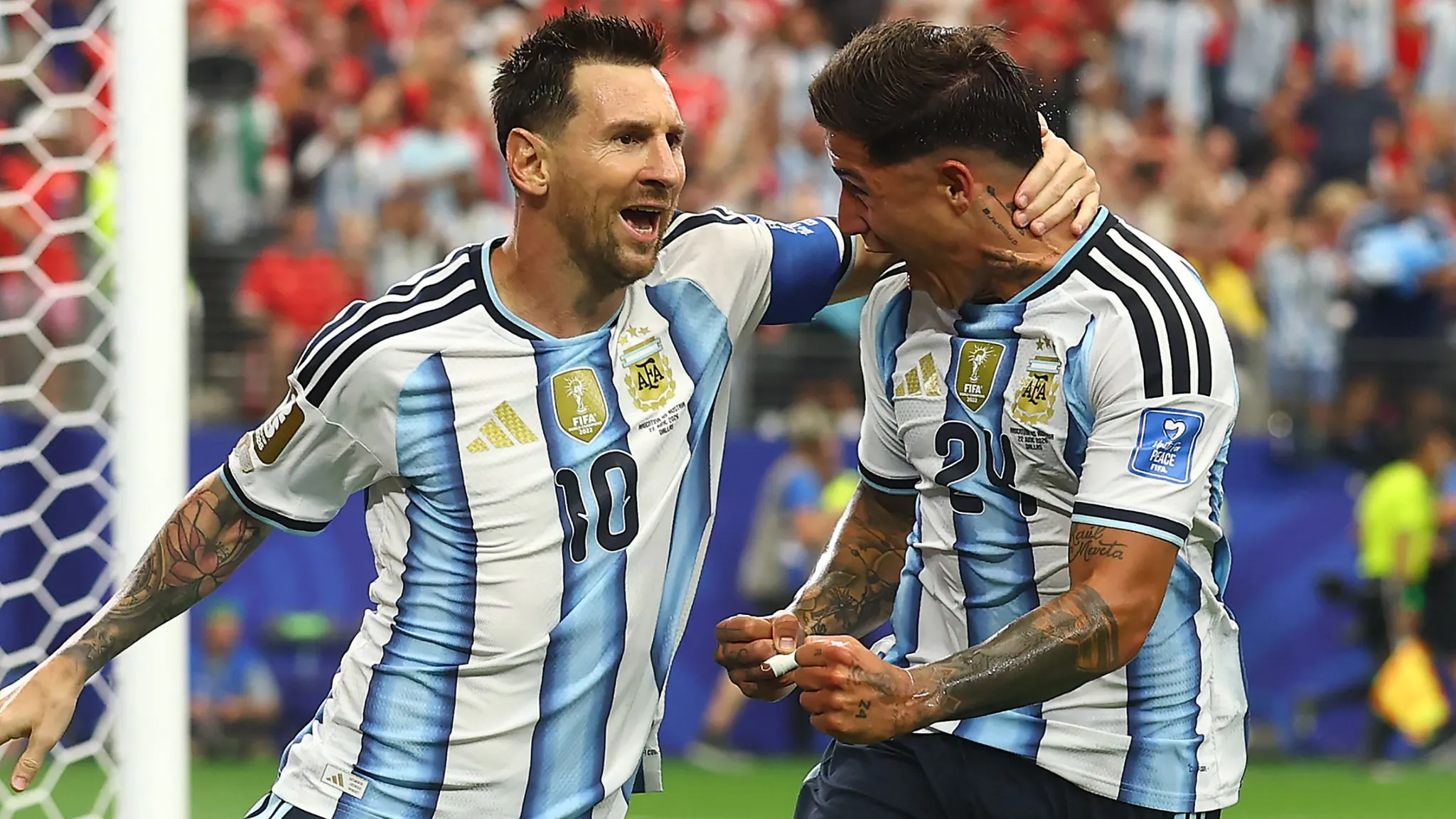
The most captivating thing about sport is that it never follows the script. The entire planet was waiting for that one Messi goal — and in the 9th minute he dragged the penalty wide, the ball skidding past the left post as Austria goalkeeper Alexander Schlager roared in celebration. In that instant, the record was postponed. But in under half an hour it arrived anyway, in a manner far more fitting for Messi. The holders beat Austria 2–0 to lock up their place in the round of 32, and the captain himself became the leading scorer in the history of the World Cup.
Argentina: a system built for one man, running like clockwork
Scaloni's side carry a fearsome balance. Up front, every line converges on Messi; at the back, they have barely allowed opponents a sight of goal — Algeria managed zero shots on target, and Austria mustered just one all night, a speculative Marcel Sabitzer set-piece effort. This is not solidity stitched together by luck, but a machine precisely engineered around a talisman without ever depending solely on him. Emiliano Martínez was seriously tested only once, while the running of Lautaro Martínez, Julián Álvarez and Thiago Almada constantly prised gaps for the number ten. Since losing their group opener to Saudi Arabia in 2022, Argentina are now unbeaten in eight World Cup matches (six wins, two draws).
The two moments
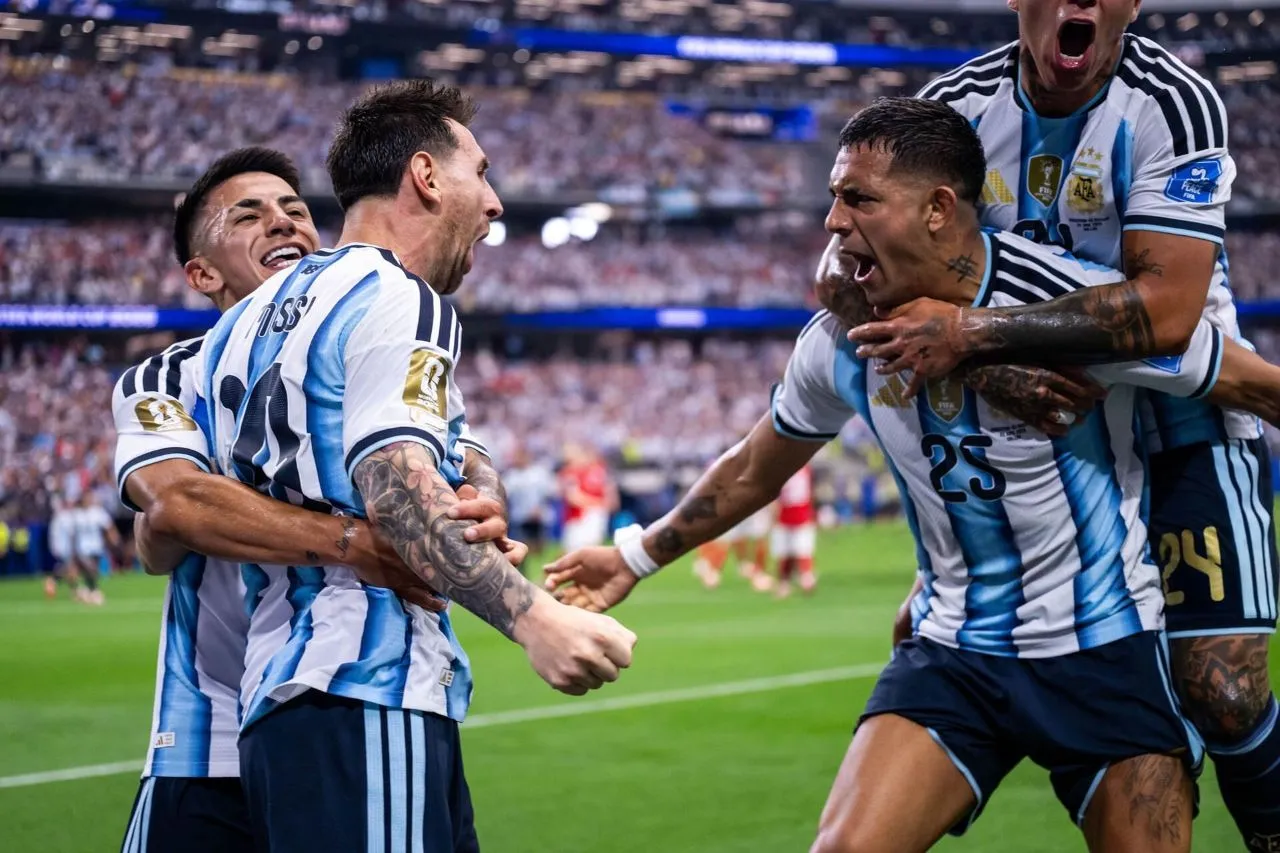
The first goal was a textbook "Messi moment." Thiago Almada cleverly let the ball run through his legs, Facundo Medina crossed low from the left, and Messi read it perfectly, arriving late to sweep a first-time finish into the near corner as a sea of red and white erupted. The second came later and was more stubborn: deep into stoppage time, Álvarez's shot was parried by Schlager, the ball broke to Messi, his first effort was blocked, and he refused to relent, bundling home the rebound inside the six-yard box. From the missed penalty to the decisive blow, this is the essence of champions.
Austria: the blue wall that lost with honour
Rangnick's side did not come to Dallas to applaud Messi. They chose to sit deep, using physicality and pressing to squeeze the spaces. They were limited going forward, with no shot on target in the first half, but that backline commanded real respect at times. Captain David Alaba was Austria's hero: in the 19th minute he nicked the ball off Messi's toes as the Argentine threatened to break clear, and in the 31st he blocked a goal-bound effort with the keeper stranded. Defender Kevin Danso also threw himself in front of danger repeatedly, while Schlager saved both the penalty and an Álvarez strike. They lost — but they earned respect.
Key duels and decisions
The biggest controversy came in the 9th minute: Lautaro Martínez was sandwiched and brought down by Schlager and Stefan Posch in the box. Referee Amin Omar initially waved play on before awarding the spot-kick after a VAR review — only for Messi to drag it wide. In second-half stoppage time, Messi's second goal underwent a brief VAR check before being confirmed. This was an intense, tightly contested match, but it never boiled over, and the man who decided its course was always the one wearing number ten.
The men who decided it
Lionel Messi — his 17th and 18th World Cup goals carried him past Klose (16) to stand alone atop the tournament's all-time scoring chart, now two clear, with five goals this edition leading the Golden Boot race. More astonishing still, he became the third player in more than half a century to score in six consecutive World Cup matches, joining Just Fontaine (1958) and Jairzinho (1970). A man about to turn 39, long shorn of his pace, did it all with a late run and a composed finish — arguably more improbable than any hat-trick.
David Alaba — if you had to choose one name from the losing side, it is his. He snuffed out Messi's threat twice in the most dangerous areas, using a top centre-back's reading of the game to keep Austria in the contest for long spells. A captain's display in a defeat worn with pride.
The managers' contribution
Scaloni was once mocked as an underqualified appointment; he has since built the most cohesive championship core of the era — laying everything around the greatest player of all time without ever reducing his team to a one-man act, the very "sweet spot" Argentina have found. Across the touchline, Rangnick, one of the founding fathers of modern high pressing, delivered a masterclass in restrained aggression: swarm in packs, choke the half-spaces, and pray the champions are off-colour. The tactical chess was as compelling as the action itself.
Standings and outlook
Argentina have won both matches for six points, qualifying with a game to spare and all but securing top spot in Group J (confirmed as long as Jordan fail to beat Algeria). Finishing first would send them to Miami on 3 July to face the Group H runners-up — which, as things stand, would mean avoiding a heavyweight like Spain in the last 32. In their final game against Jordan, Messi will almost certainly get the chance to keep extending his record.
Austria sit second on three points, their fate to be settled in a final-day showdown with Algeria. Win it, and they reach the World Cup knockouts for the first time since 1954 — for a side back at the finals for the first time in 28 years, that alone would be a story worth telling.