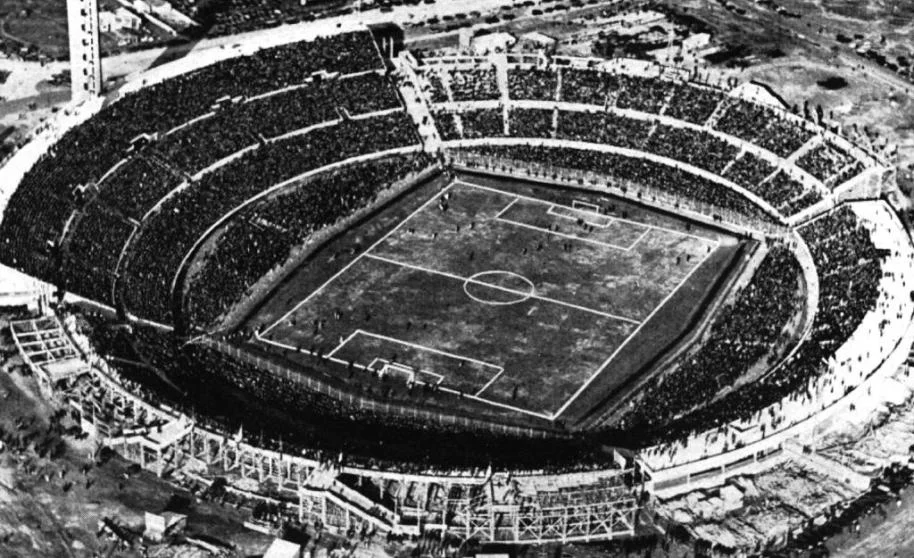
In July 1930, thirteen teams gathered in Montevideo for a competition nobody could be sure would matter. Most of Europe declined to make the long sea crossing. The hosts, Uruguay, won it, and a little under 600,000 people watched across the whole tournament. Ninety-six years later, a single afternoon at the 2026 World Cup drew more spectators than that entire inaugural event. This is the story of everything that changed in between — the football, the laws, the records, and the money.
The Expansion
From a steamship gamble to a continent-sized spectacle
The World Cup's growth has come in deliberate leaps. The 1930 field of 13 became 16 in 1934, a number that held with remarkable stubbornness for almost half a century. The first true enlargement arrived in 1982, when Spain hosted 24 teams; France 1998 pushed it to 32, the format an entire generation grew up with. The 2026 edition is the boldest jump yet: 48 nations, 104 matches, and — for the first time — three host countries, with the United States, Canada and Mexico sharing 16 venues across a continent.
That expansion is the engine behind almost every other number in this chronicle. More teams mean more matches, more tickets, more broadcast inventory and more nations with a reason to care. It has also, quietly, rewritten who gets to dream: Mexico's Estadio Azteca becomes the only stadium ever to host three World Cups, while debutants like Curaçao — the smallest nation by population ever to reach the men's finals — take their place alongside the giants.
| Year | Host(s) | Teams | Matches | Total attendance |
|---|---|---|---|---|
| 1930 | Uruguay | 13 | 18 | ~590,549 |
| 1954 | Switzerland | 16 | 26 | 768,607 |
| 1982 | Spain | 24 | 52 | 2,109,723 |
| 1994 | USA | 24 | 52 | 3,587,538 |
| 1998 | France | 32 | 64 | 2,785,100 |
| 2022 | Qatar | 32 | 64 | ~3,400,000 |
| 2026 | USA · Canada · Mexico | 48 | 104 | 5.5M+ (proj.) |
The 1994 World Cup in the United States stands as a defining pivot — a record 3.59 million spectators and an average of 68,991 per match, a number that has only now been challenged by the 48-team format. USA 1994 proved that American audiences would embrace the sport, laying the groundwork for the tri-continental behemoth of 2026.
The Football
How the game itself was reinvented, era by era
If you could transport a 1930 side onto a 2026 pitch, the gulf would be less about fitness than about ideas. The early World Cups were played in variations of the attacking 2-3-5 "pyramid" and Herbert Chapman's WM formation — shapes that look almost recklessly open to a modern eye. The first revolution came from Hungary's "Magical Magyars" of the 1950s, whose deep-lying forwards baffled opponents, and from Brazil, whose fluid 4-2-4 carried a teenage Pelé to the 1958 title and announced a new South American grammar of the game.
The pendulum then swung toward control. Italy's catenaccio bolted the door in the 1960s; Brazil's 1970 vintage, still regarded by many as the finest team ever assembled, answered with attacking football of impossible elegance. Four years later came the idea that reshaped everything: the Total Football of Rinus Michels and Johan Cruyff, in which every outfield player could occupy any role. Its DNA runs straight through to Spain's possession-based tiki-taka, which won 2010, and into the modern era of high pressing, gegenpressing and data-driven positional play.
There is a cost to all this organisation, and the scoreboard records it plainly. The 1954 tournament remains the most prolific in history at 5.38 goals per game; today's World Cups, with their compact blocks and choreographed pressing, typically settle nearer 2.5. The modern game is faster, fitter and far more tactically literate — but it makes its goals work much harder.
"The early World Cups were a contest of instinct. The modern one is a contest of systems — and the goals are rarer for it."
The Rulebook
The laws that quietly changed the spectacle
Few fans arrive for the rule changes, yet they have shaped the modern game as decisively as any coach. For the tournament's first four decades there were no substitutes at all and no cards to signal a booking — the now-universal yellow and red were only introduced at the 1970 World Cup, born of the confusion that followed disputed bookings in 1966. The 1992 back-pass law, barring goalkeepers from handling deliberate passes from teammates, did more to speed up football and kill time-wasting than almost any tactic. Three points for a win, adopted at the World Cup in 1994, rewarded ambition over the safety of a draw.
Technology then entered the field. Goal-line technology debuted in 2014, ending a century of "did it cross the line?" arguments; VAR arrived in 2018 as the most consequential — and most argued-over — change in a generation; semi-automated offside followed in 2022. The 2026 edition has gone further still on conduct, introducing measures against time-wasting and dissent. Each tweak, in its way, is an attempt to keep a 19th-century game legible to a 21st-century audience.
| Year | Change |
|---|---|
| 1970 | Substitutes permitted; yellow & red cards introduced |
| 1992 | Back-pass rule — keepers may no longer handle deliberate passes |
| 1994 | Three points awarded for a win |
| 1998–2002 | "Golden goal" extra time (later abolished, 2004) |
| 2014 | Goal-line technology |
| 2018 | Video Assistant Referee (VAR) |
| 2022 | Semi-automated offside; five substitutes permitted |
| 2026 | New anti-time-wasting and player-conduct laws |
The Goals
The records that define footballing immortality
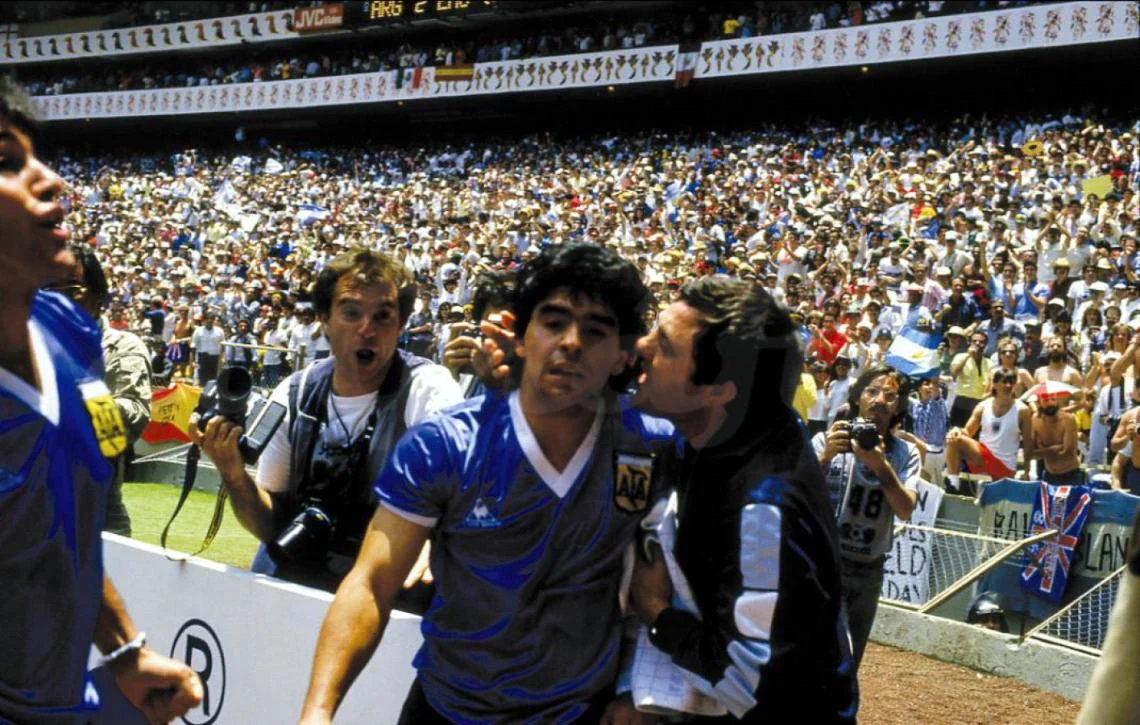
For all the talk of systems, the World Cup is still measured in goals — and its scoring landmarks are among the hardest records in sport to claim, precisely because a player gets only a handful of chances every four years. For nearly two decades the all-time mark belonged outright to Germany's Miroslav Klose, who needed 24 matches across four tournaments to reach 16. At this 2026 edition, Lionel Messi drew level with a hat-trick against Algeria in his sixth World Cup, and — as the only active man of the two — now stands a single goal from sole ownership of the record.
Yet the most untouchable number on the list is older and stranger. In 1958, France's Just Fontaine scored 13 goals in a single tournament across just six matches. Nearly seventy years and countless great forwards later, no one has come close. It endures as perhaps the most unbreakable record in football.
13 in 6
Just Fontaine's 1958 single-tournament haul — a record that has survived every golden generation since.
| Player | Goals | Tournaments |
|---|---|---|
| Miroslav Klose (GER) | 16 | 2002–2014 |
| Lionel Messi (ARG) | 16 | 2006–2026 |
| Ronaldo (BRA) | 15 | 1998–2006 |
| Gerd Müller (GER) | 14 | 1970–1974 |
| Kylian Mbappé (FRA) | 14 | 2018–2026 |
| Just Fontaine (FRA) | 13 | 1958 only |
| Pelé (BRA) | 12 | 1958–1970 |
Around those totals sit the curiosities that give the tournament its folklore: Oleg Salenko's five goals in one match for Russia in 1994, the only time it has been done; Hakan Şükür's strike after just 11 seconds in 2002, still the fastest ever; and the select club — Messi and Cristiano Ronaldo among them — to have scored across five different World Cups.
The Money
How a football tournament became a financial superpower
The economics of the World Cup have grown at a pace the football has not. FIFA earned nothing from prize money in 1930; today the organisation's revenue, reported in four-year cycles built around the tournament, has climbed from $6.42 billion in 2015–18 to a record $7.57 billion in 2019–22 — and a budgeted figure of around $13 billion for the 2023–26 cycle ending with this expanded World Cup. The single biggest driver is television: broadcast rights alone accounted for roughly 45% of that 2019–22 record, and the 2022 World Cup year produced $5.77 billion on its own.
The cost of staging the thing has spiralled even more dramatically, and far less predictably. The USA hosted in 1994 for around $500 million, using stadiums that already existed. As emerging economies began treating the tournament as a nation-building project, the numbers exploded: Brazil 2014 ran to roughly $15 billion, Russia 2018 to $11.6 billion, and Qatar 2022 to a staggering estimated $220 billion — the most expensive sporting event in human history. The 2026 model, leaning on existing North American venues, marks a deliberate reset, with total costs projected nearer $10 billion even as FIFA's haul hits record highs.
| Edition | Est. host cost | FIFA cycle revenue |
|---|---|---|
| USA 1994 | ~$0.5B | — |
| Germany 2006 | ~$4B | — |
| Brazil 2014 | ~$15B | $5.7B (2011–14) |
| Russia 2018 | ~$11.6B | $6.4B (2015–18) |
| Qatar 2022 | ~$220B | $7.57B (2019–22) |
| USA·CAN·MEX 2026 | ~$10B (proj.) | ~$13B (2023–26, proj.) |
It is a revealing imbalance. Host nations increasingly shoulder vast, often unrecoverable costs — Brazil and Qatar both left behind "white elephant" stadiums — while FIFA, a non-profit that redistributes much of its income through development programmes across all 211 member associations, banks ever-larger surpluses. The 2026 tournament is, in financial terms, the most lucrative in history.
The Audience
The crowd that grew into half the planet
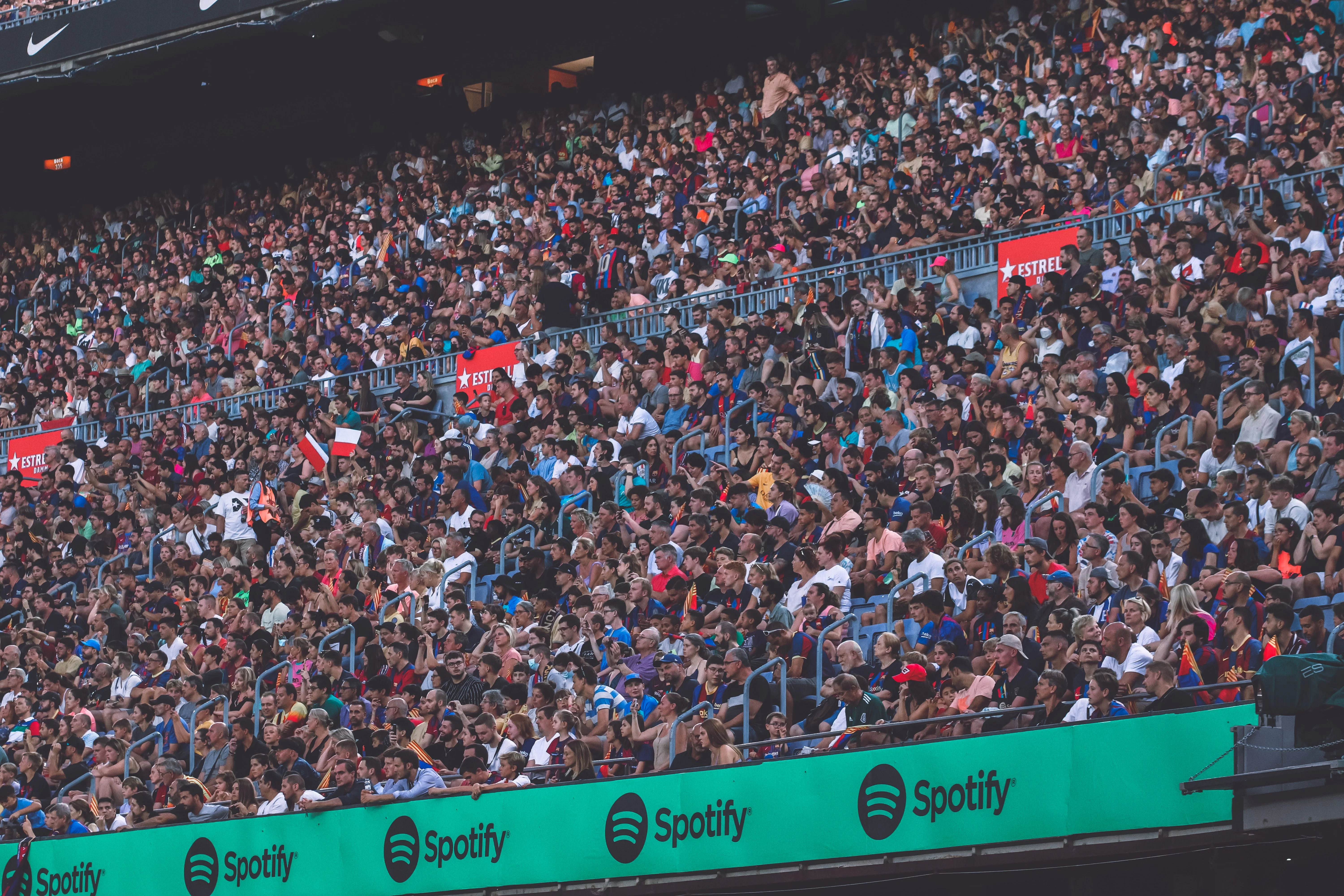
The clearest measure of the World Cup's rise is simply who shows up — in the stadium and in front of a screen. The 1930 tournament drew under 600,000 across its 18 matches. The USA set a record in 1994 that has stood for more than three decades: 3,587,538 spectators at an average of 68,991 a game, the high-water mark of the live era. With the 32-team format, attendance settled into a steady band around 3 to 3.4 million. The 48-team 2026 edition has blown the ceiling off — projected at 5.5 million or more, and already rewriting records, with four matches on a single June afternoon drawing 281,223 fans to break a mark set in 1994.
The broadcast story is even more staggering. The World Cup was first televised in 1954; today it reaches more than 200 countries and territories. The 2022 final alone was watched by close to 1.5 billion people, with cumulative engagement across the tournament estimated in the billions. The single-match attendance record, fittingly, belongs to an earlier age — roughly 174,000 packed into Rio's Maracanã for the decisive 1950 match — but the reach of the modern game would have been unimaginable to those who made that crossing to Montevideo.
~1.5 billion
Estimated global audience for the 2022 World Cup final — roughly one in every five people alive.
The Technology
From a single camera to a connected ball
No force has reshaped how the world experiences the World Cup more quietly, or more completely, than technology. The tournament was first televised in 1954, a grainy signal reaching a handful of European countries. Mexico 1970 was the leap that mattered: the first World Cup broadcast in colour, and the first beamed live around the planet by satellite, so a fan in Europe could watch Pelé in real time rather than wait days for film reels. From there the pictures only sharpened — through high definition to the 4K HDR coverage that debuted in 2018 — while the broadcast itself grew a second screen of information layered over the grass.
On the pitch, the revolution has been about truth. Goal-line technology arrived in 2014 to settle a century of "did it cross the line?" disputes. VAR followed in 2018. Then came the most sophisticated leap yet: the semi-automated offside system of 2022, which uses twelve dedicated cameras tracking 29 points on every player fifty times a second, fused with a sensor suspended inside the match ball that reports its position 500 times a second. By 2026 that "connected ball" has stopped being a novelty and become part of the tournament's basic officiating infrastructure.
29 points · 500×/sec
The limb-tracking data points per player, and the rate the connected ball reports its own position: the machinery behind a modern offside call.
The same data tide has transformed how fans read the game and how coaches build their teams. Distance covered, sprint counts, possession share, pass networks and expected goals (xG) are now standard furniture on a broadcast graphic, where a generation ago they did not exist. Behind the scenes, the modern footballer is among the most measured athletes alive: GPS vests and heart-rate monitors quantify physical load in training, force plates and biomechanical capture break down ball speed and shot angle, and video platforms turn an opponent's last six months into a searchable file. At the 2022 tournament FIFA even handed players an app to review their own tracking data after matches. The artistry is still human — but it is now scaffolded by an industry of measurement.
| Year | Milestone |
|---|---|
| 1954 | First World Cup broadcast on television |
| 1970 | First in colour; first beamed live worldwide by satellite |
| 2014 | Goal-line technology |
| 2018 | VAR introduced; first tournament produced in 4K HDR |
| 2022 | Semi-automated offside; first "connected" match ball (Al Rihla) |
| 2026 | Connected ball as standard officiating tech; live performance data everywhere |
The IP Machine
Mascots, shirts, stickers and the betting boom
Long before the tournament became a broadcast giant, it learned to sell itself a face. The mascot tradition began in 1966 with World Cup Willie, a lion in a Union Jack shirt drawn by a freelance illustrator — and the first mascot in major international sport to generate merchandise at scale. Willie set a template the tournament has never abandoned: a single marketable character to anchor licensing, toys and host-country storytelling. Six decades later it has produced an orange (Naranjito, 1982), an abstract block-figure (Ciao, 1990), a rooster (Footix, 1998), a leopard (Zakumi, 2010) and, in 2026, a first — a trio of mascots, Maple, Zayu and Clutch, one for each of the three host nations.
Around the mascots grew an entire merchandising economy. Replica shirts turned national kits into global fashion, each tournament's design language becoming a collectible era of its own. And nothing captures the culture quite like the Panini sticker album, launched for Mexico 1970 and now sold in more than 150 countries. The 2026 edition is the largest in its history at 980 stickers — a 50% jump on 2022, driven purely by the leap from 32 to 48 teams — and completing it can cost a collector well over a thousand dollars. The collectibles themselves have become assets: a one-of-one Messi sticker from 2022 sold for $139,200, and with the global sports trading-card market valued at $12.6 billion in 2025, FIFA is moving its collectibles rights to Fanatics from 2031.
| Year | Mascot | Host |
|---|---|---|
| 1966 | World Cup Willie (lion) | England |
| 1982 | Naranjito (orange) | Spain |
| 1998 | Footix (rooster) | France |
| 2010 | Zakumi (leopard) | South Africa |
| 2022 | La'eeb | Qatar |
| 2026 | Maple · Zayu · Clutch (trio) | USA · Canada · Mexico |
The most explosive corner of the World Cup economy, though, is the one played out away from the stadium. Wagering on the tournament has grown from informal office pools into the single largest betting event on Earth: analysts estimated roughly $35 billion was staked legally on the 2022 edition worldwide, and projections for the expanded 2026 tournament run to $50–60 billion — a record. The United States, where a 2018 court ruling unwound the old federal ban and legal sportsbooks have since spread to most of the country, is a fast-growing but still modest slice of that global figure, with wagering expected to climb from around $1.8 billion in 2022 toward $3 billion in 2026. It is a colossal, and increasingly normalised, industry — and one worth treating with caution, since behind the handle figures sit real questions about regulation and problem gambling.
$50–60 billion
The projected global betting handle on the 2026 World Cup — by some distance the most wagered-on sporting event in history.
2026 · The New Frontier
The biggest World Cup ever made
Every thread of this chronicle converges on the tournament unfolding now. The 2026 World Cup is the largest, richest and most-watched edition in the competition's history: 48 nations, 104 matches, three host countries, record attendances and a record financial cycle. It is also a tournament of firsts and farewells — Messi chasing a record outright, a new generation in Mbappé and Erling Haaland chasing him, and debutant nations writing their first lines of World Cup history.
What began in 1930 as a leap of faith by a handful of footballing nations has become a genuinely planetary event, one that pauses much of the world for a month every four years. The football has been reinvented several times over; the laws, the economics and the audience are barely recognisable. But the essential promise — that any of these teams might, on a given afternoon, do something no one will ever forget — is exactly the same as it was in Montevideo.
PitchChronicles Original. Written in collaboration with AI. All analysis and editorial perspective produced exclusively for PitchChronicles.com. © 2026 PitchChronicles.