Group K enters a critical juncture with this highly anticipated intercontinental clash at Estadio BBVA in Monterrey. Portugal commands the top of the group with 4 points and a +3 goal difference following a thrilling opening victory and a tactical stalemate against a stubborn Colombian side. Meanwhile, Uzbekistan sits firmly in contention, occupying second place with 3 points and a +1 goal difference after a mature, clinical performance in their previous outing.
Roberto Martínez has built a Portuguese side that thrives on positional fluidity and vertical overload. While A Seleção has looked characteristically dominant in possession, their high defensive line has occasionally looked vulnerable to ultra-fast, direct counter-attacks when their counter-press fails to lock down the midfield. Against Uzbekistan's disciplined transition game, this vulnerability could prove costly if Martínez's men are not vigilant.
The White Wolves have been the tournament's silent assassins. Operating with absolute tactical humility and supreme defensive symmetry under Srečko Katanec, they have used a low mid-block to frustrate opponents before using rapid transition sequences to clinical effect. Their opening victory over DR Congo announced them as a genuine threat in this group, and their defensive organization has drawn praise from neutral observers across the football world.
Group Stage Matrix & Current Standings
With both sides still in contention for the top spot, this match carries enormous implications for the knockout round draw.
| Team | Pld | W | D | L | GF | GA | GD | Pts |
|---|---|---|---|---|---|---|---|---|
| Portugal | 2 | 1 | 1 | 0 | 4 | 1 | +3 | 4 |
| Uzbekistan | 2 | 1 | 0 | 1 | 2 | 1 | +1 | 3 |
| Colombia | 2 | 0 | 2 | 0 | 1 | 1 | 0 | 2 |
| DR Congo | 2 | 0 | 1 | 1 | 1 | 3 | -2 | 1 |
Portugal's Campaign So Far: Roberto Martínez has built a side that thrives on positional fluidity and vertical overload. Portugal opened with a dominant 3-0 win over DR Congo, with Bruno Fernandes pulling the strings from midfield. They were then held to a 1-1 draw by Colombia in a match where their high defensive line was repeatedly exposed by quick counter-attacks. While A Seleção has looked characteristically dominant in possession, their defensive transitions remain a concern.
Uzbekistan's Campaign So Far: The White Wolves have been the tournament's silent assassins. Operating with absolute tactical humility and supreme defensive symmetry, they opened with a 0-1 loss to Colombia—a scoreline that flattered the South Americans—before bouncing back with a composed 2-0 victory over DR Congo. They have used a low mid-block to frustrate opponents before using rapid transition sequences to clinical effect, and Katanec's defensive structure is the most organized of any Asian side in the tournament.
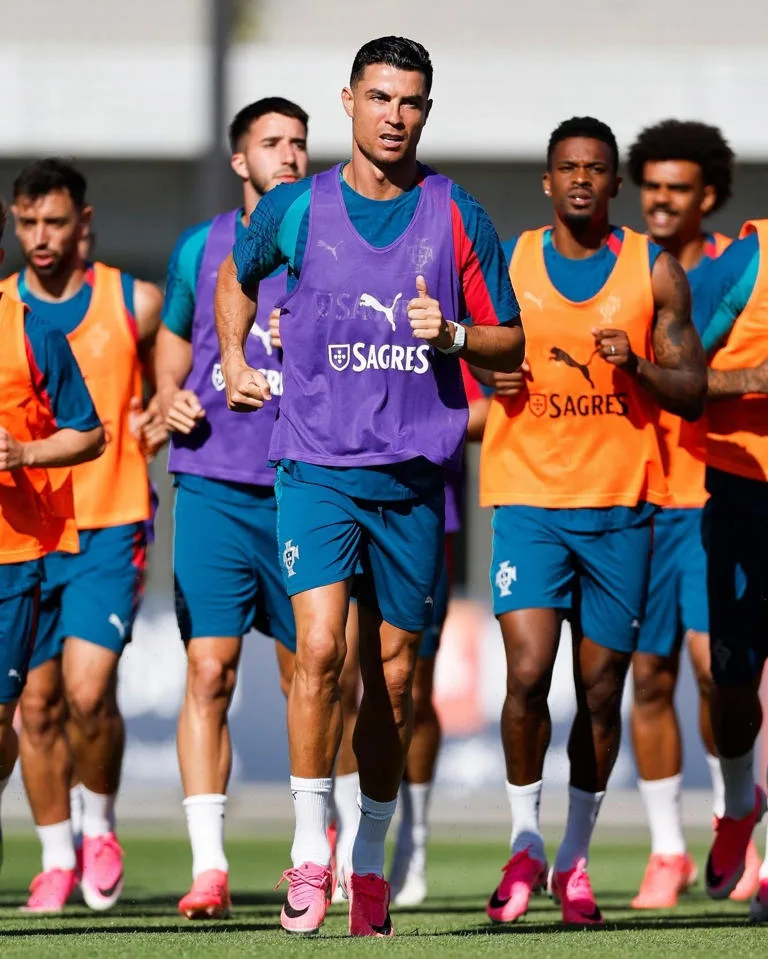
Historical Resonance: The Weight of Tradition
Competitive fixtures between Portugal and Uzbekistan at the senior international level are historically non-existent. This match marks a historic maiden encounter between the two nations, adding a clean tactical canvas and intense psychological drama to this high-stakes tournament setting. Neither side has the comfort of prior experience against the other, making the opening 15 minutes a period of mutual discovery.
While Portugal holds a profound historical pedigree against Asian opposition across various World Cup cycles, Uzbekistan's recent tactical evolution under European coaching methodologies has bridged the structural gap. The lack of prior head-to-head data means both technical staffs have relied heavily on recent video analysis rather than historical trends, giving an advantage to the team that adapts faster to the unfolding reality on the pitch.
For Portugal, this is an opportunity to demonstrate that their golden generation can navigate the awkward challenge of breaking down a disciplined defensive block—a skill that will be essential in the knockout stages. For Uzbekistan, it is a chance to announce themselves as the tournament's surprise package and prove that Asian football's tactical evolution has reached a level where it can compete with Europe's elite on equal terms.
The Managerial Chessboard
Roberto Martínez — Breaking the Low Block Without Breaking Trust
Martínez's preparation centers around breaking the low block without exposing his center-backs to devastating counter-attacks. Expect Portugal to deploy an asymmetrical 3-2-5 in possession, utilizing Nuno Mendes as an overlapping wing-back while instructing Vitinha to stay deep alongside João Palhinha to extinguish Uzbekistan's transition triggers immediately. The width will come from the full-backs, while the interior forwards collapse into half-space zones designed to overload Uzbekistan's central defensive structure.
The key tactical instruction will be patience. Martínez knows that Uzbekistan's defensive shape is at its most vulnerable after the 65th minute, when fatigue begins to erode the structural discipline that Katanec has drilled into his players. Portugal's bench depth—with the likes of João Félix, Gonçalo Ramos, and Otávio ready to enter the fray—gives Martínez the luxury of introducing fresh attacking impetus against a tiring defensive unit.
Srečko Katanec — Tactical Humility as a Weapon
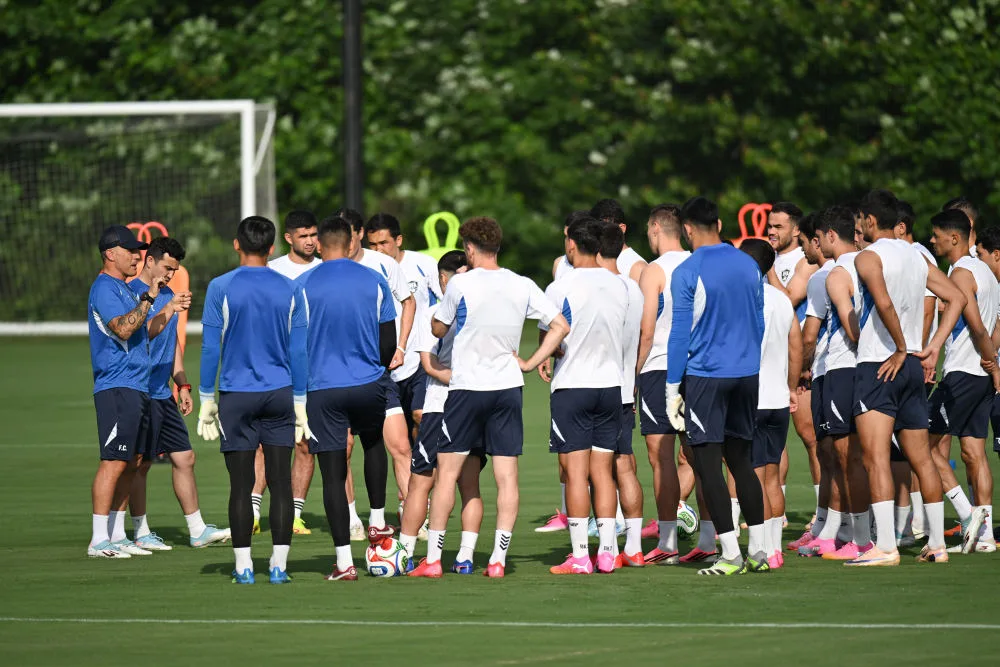
The experienced Slovenian tactician knows that matching Portugal's technical cadence is impossible. Katanec has spent the pre-match training sessions drilling a highly disciplined 5-4-1 defensive shape designed to clog the central areas that Portugal's creative players love to operate in. His strategy relies on closing down the central half-spaces, forcing Portugal out wide where his physically imposing central defenders can dominate aerial duels.
In attack, Uzbekistan's game plan is ruthlessly simple: win the ball, find Eldor Shomurodov, and spring the wingers into the space behind Portugal's advanced full-backs. Katanec has identified Portugal's high defensive line as the most exploitable weakness in Martínez's system and has designed his transitional patterns to target this vulnerability directly.
Star Player Focus: The Focal Points
Bruno Fernandes (Portugal)
The ultimate creative engine for this Portuguese side. In a game where space will be at an absolute premium, Fernandes' ability to play one-touch progressive passes into the penalty box will be paramount. His late ghosting runs from midfield into the channels will be crucial to unlocking Uzbekistan's back five, while his set-piece delivery—particularly from wide areas—could be Portugal's most reliable route to goal against a defense that concedes very few clear-cut chances from open play.
Eldor Shomurodov (Uzbekistan)
The veteran talisman and focal point of Uzbekistan's attacking structure. Shomurodov's role is brutal but vital: he must act as an isolated relief valve, holding up long clearances against Rúben Dias and drawing fouls to give his defensive line time to push up the pitch and breathe. His physical battle with Portugal's center-backs may not show up on the scoresheet, but it will determine whether Uzbekistan can sustain any meaningful attacking presence in the game.
Vitinha (Portugal)
The deep-lying metronome whose tactical discipline will be essential in preventing Uzbekistan's transitions. Vitinha's role as the connector between defense and attack requires him to receive the ball under pressure and find progressive passes into Fernandes and the attacking line. If Uzbekistan's press successfully disrupts Vitinha's rhythm, Portugal's entire attacking structure becomes disjointed.
Oston Urunov (Uzbekistan)
The explosive winger who provides Uzbekistan's primary threat in transition. Urunov's acceleration and direct running make him the ideal weapon to exploit the space behind Portugal's advanced full-backs. His ability to carry the ball at speed and deliver accurate crosses into the box will be Uzbekistan's most dangerous attacking outlet.
Pitch Chronicles Bold Prediction
At the Pitch Chronicles tactical desk, we anticipate an intense game of patience. Uzbekistan will successfully absorb immense pressure in the opening forty-five minutes, frustrating Portugal's star-studded frontline with their disciplined 5-4-1 defensive structure. Katanec's men have the tactical organization to keep the scoreline level at halftime, and the longer the game remains goalless, the more frustrated Portugal's creative players will become.
However, Portugal's unmatched depth from the bench will ultimately tilt the scales. Martínez's ability to introduce fresh attacking options—including the evergreen Cristiano Ronaldo, whose movement and experience against deep blocks are unparalleled—will gradually stretch Uzbekistan's defense beyond its breaking point. The White Wolves' concentration levels, which have been remarkable throughout the tournament, will inevitably waver under sustained second-half pressure.
The decisive goal will come from a moment of individual quality—a Fernandes through ball, a Vitinha switch of play, or a Ronaldo run that pulls the defensive line out of shape—rather than a structural breakdown. Martínez's tactical adjustments and the sheer weight of Portugal's attacking talent will find the crack in the wall, and once the floodgates open, Uzbekistan's composure may desert them.
Our Bold Score Prediction: Portugal 2 - 0 Uzbekistan