Ask a casual fan to name a moment from the 1950 World Cup and most will draw a blank — except for one scoreline. USA 1, England 0. The result is more famous than the tournament that contained it, and that is the strange power of the great World Cup upset: it detaches from its surroundings and becomes a permanent fixture in football's memory. This is our index of the biggest of them — and an argument that, in the 48-team era, the giant-killers are only getting started.
Why the giants keep falling
Upsets are not random. They recur because the World Cup is built to produce them. The format is short and unforgiving: a single bad afternoon, with no second leg to set it right, can undo months of dominance. The favourites carry the heavier psychological load, while the underdog plays with nothing to lose and everything to gain. And the gap in preparation often runs the other way — the smaller nation studies its opponent obsessively, while the giant, secure in its talent, does not.
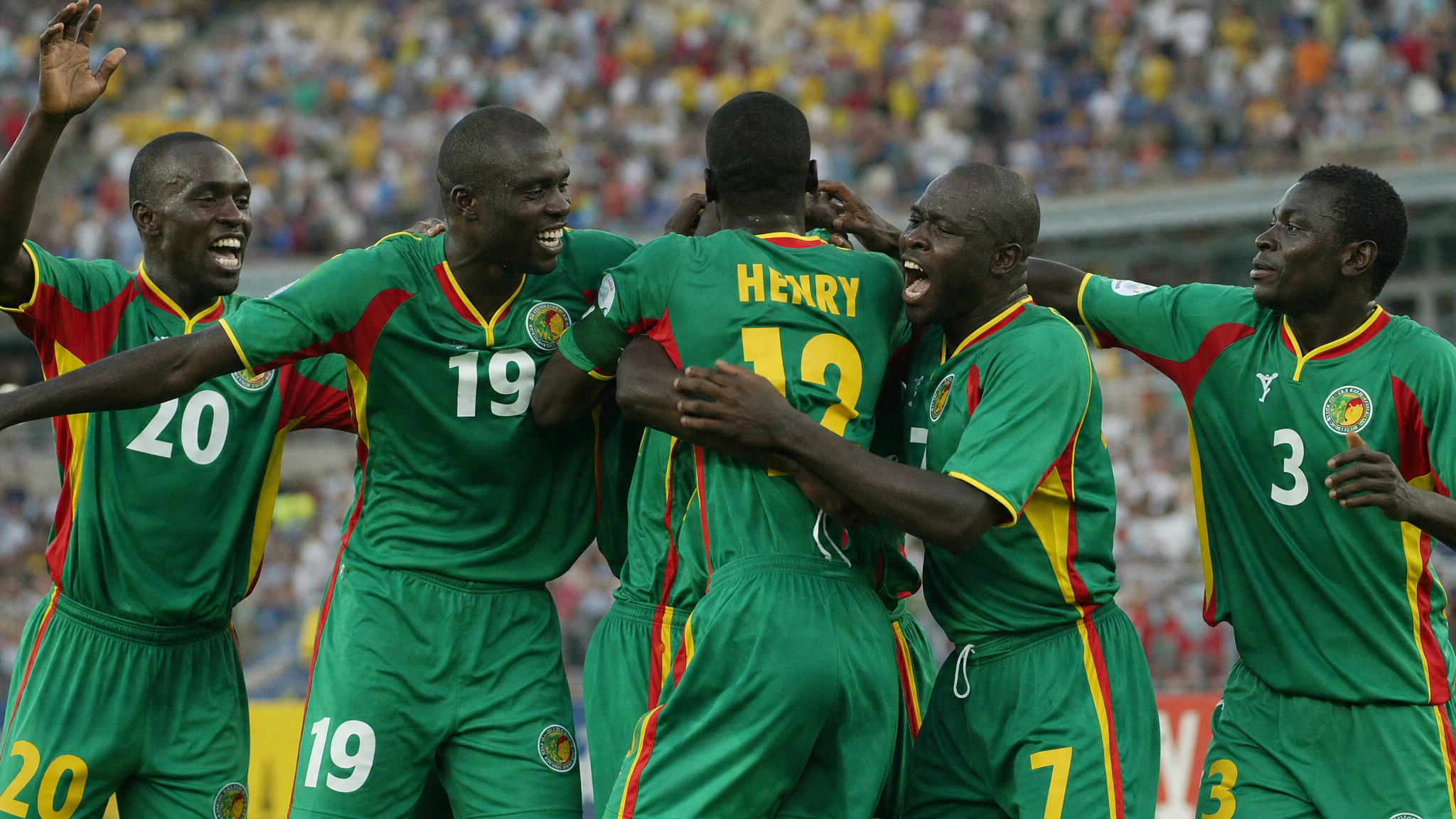
There is a generational thread, too. Senegal's class of 2002 had grown up watching Cameroon stun Argentina in 1990; belief, once established, is inherited. The crowd rarely helps the favourite as much as expected, and tournament pressure can paralyse the side everyone assumes will win. Put those forces together and the surprise is not that upsets happen — it is that anyone still calls them surprises.
The underdogs did their homework. The favourites, almost without exception, did not do theirs.
Eight nights that rewrote the script
Ranking upsets is an inexact art — odds, stakes and lasting cultural weight all matter. Here is our selection of the defining shocks, the results that became bigger than the tournaments around them.
| Result | Year | Why it stunned the world |
|---|---|---|
| USA 1–0 England | 1950 | Amateurs and part-timers beat one of the pre-tournament favourites; the scoreline alone became legend. |
| W. Germany 3–2 Hungary | 1954 | The "Miracle of Bern" — the Magical Magyars, unbeaten for years, lost the one match that counted: the final. |
| North Korea 1–0 Italy | 1966 | Debutants eliminated two-time champions Italy through Pak Doo-ik, then led Portugal 3–0 in the quarters. |
| Algeria 2–1 W. Germany | 1982 | The first win by an African or Arab nation over a European side at a World Cup. |
| Cameroon 1–0 Argentina | 1990 | Nine-man Cameroon downed the holders and Maradona in the opener, then became Africa's first quarter-finalists. |
| Senegal 1–0 France | 2002 | Tournament debutants beat the reigning world and European champions in the opening match. |
| S. Korea 2–0 Germany | 2018 | The holders, four-time winners, dumped out in the group stage. |
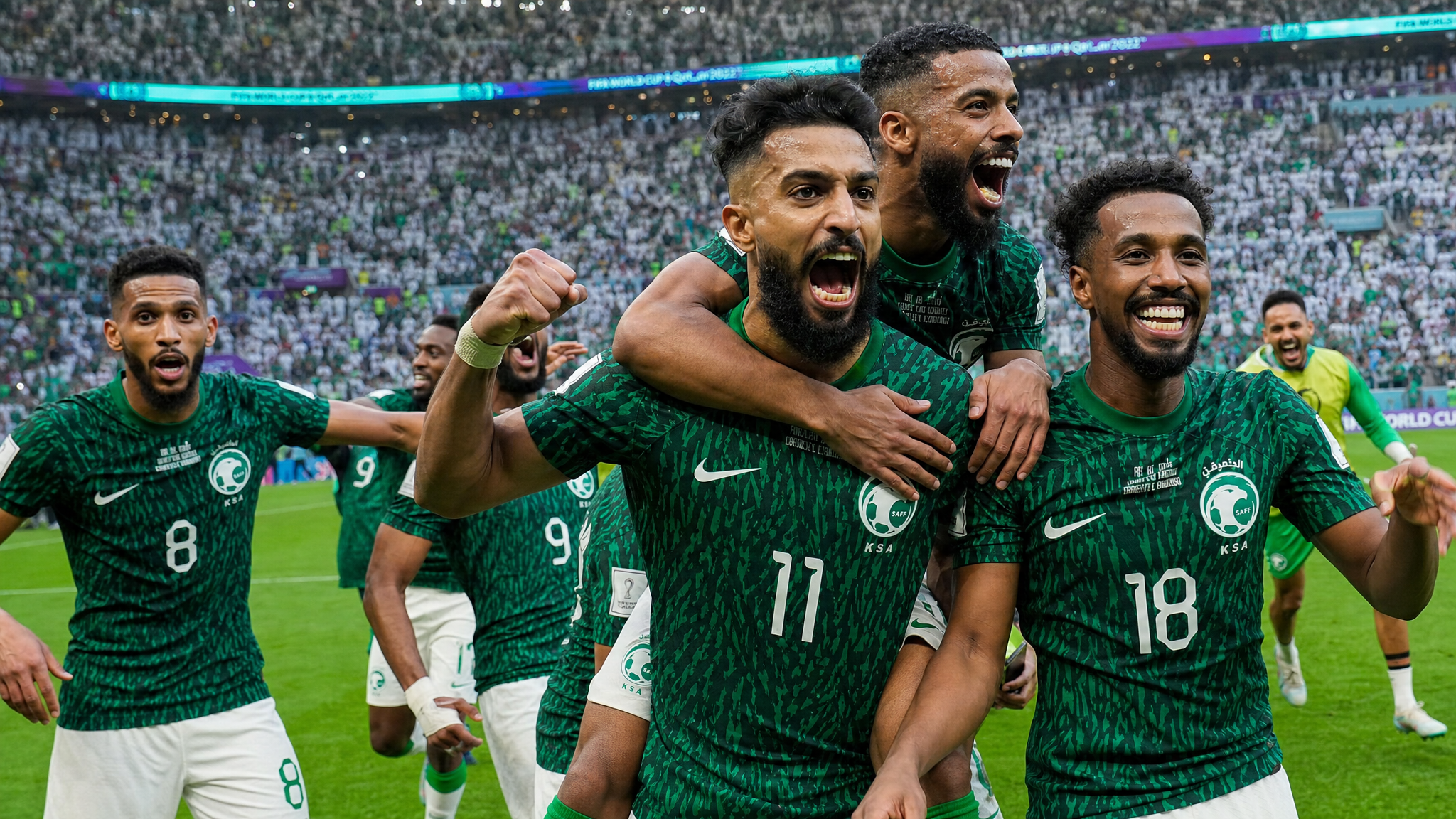
| Saudi Arabia 2–1 Argentina | 2022 | The 51st-ranked side beat the eventual champions, ending a 36-match unbeaten run at roughly 4% odds. |
How the biggest dominoes fell
Cameroon 1990: nine men, one earthquake
The 1990 opener pitted the reigning champions, with Diego Maradona at the peak of his fame, against a Cameroon side appearing in only their second World Cup. François Omam-Biyik's looping header settled it, and the Indomitable Lions held on despite finishing with nine men after two red cards. It was more than a win: roared on by veteran Roger Milla off the bench, Cameroon rode the wave to the quarter-finals, the first African nation ever to get there, and changed how the world looked at the continent's football.
Senegal 2002: the apprentices beat the masters
France arrived in Asia as world and European champions, expected to stroll. Senegal, making their tournament debut with a squad drawn almost entirely from the French league, had other plans. Papa Bouba Diop bundled in the only goal after a sharp move involving El Hadji Diouf, and the holders — toothless without the injured Zinedine Zidane — never recovered, exiting in the group stage without scoring. Senegal marched on to the quarter-finals. It remains the textbook example of a champion humbled by its own complacency.
Saudi Arabia 2022: the high-line heist
Argentina came to Qatar on a 36-match unbeaten run, with Lionel Messi chasing the one prize that had eluded him. After Messi's early penalty, the favourites had three more goals chalked off for offside — and then Saudi Arabia did something audacious. They pushed their defensive line dramatically higher, springing trap after trap, and struck twice in five minutes through Saleh Al-Shehri and a stunning Salem Al-Dawsari finish. At odds of around +2200, it was statistically one of the unlikeliest results in the tournament's history. Tellingly, Argentina absorbed the blow and won the World Cup anyway — proof that a single shock no longer has to define a champion's fate.
Morocco 2022: when the upset lasted a month
Some shocks are not a single night but an entire campaign. At Qatar 2022, Morocco did what no African or Arab nation had ever managed: they reached the semi-finals. The Atlas Lions topped a group containing Croatia and Belgium, eliminated Spain on penalties and beat Portugal 1–0, conceding just one goal — an own goal — across their entire run to the final four. It was a triumph of organisation, cohesion and collective belief over individually superior opponents, and it redrew the map of what is possible. The lesson of Morocco is the thesis of this whole index: the distance between the elite and the rest is no longer what it was.
1 goal in 5 games — Morocco's defensive record on their run to the 2022 semi-finals, and that single concession was an own goal.
The format that hands the underdog a door
The expanded 48-team World Cup is, by design, the most upset-friendly in history. With 12 groups of four and the eight best third-placed teams advancing, a single good result — even amid two defeats — can now be enough to reach the knockouts. That changes the maths of ambition for every smaller nation. A loss is survivable; a shock is golden.
The evidence is already on the board at this 2026 tournament. Côte d'Ivoire's late winner toppled an Ecuador side that arrived on a 19-match unbeaten run. DR Congo held Portugal to claim the first point in their history. Uzbekistan and Curaçao — the latter the smallest nation by population ever to reach the finals — scored their first-ever World Cup goals against far grander opposition. Iraq, the very last team to qualify, and debutants Jordan, who nearly held Austria, have shown the same defiance. None of these are full-blown giant-killings yet. But the format is quietly engineering more of the conditions that produce them.
That is the deeper truth the Underdog Index points to. The romance of the World Cup has never lived solely in the trophies the favourites lift. It lives in the afternoons when the script is torn up — and the tournament has just made those afternoons more likely than ever.