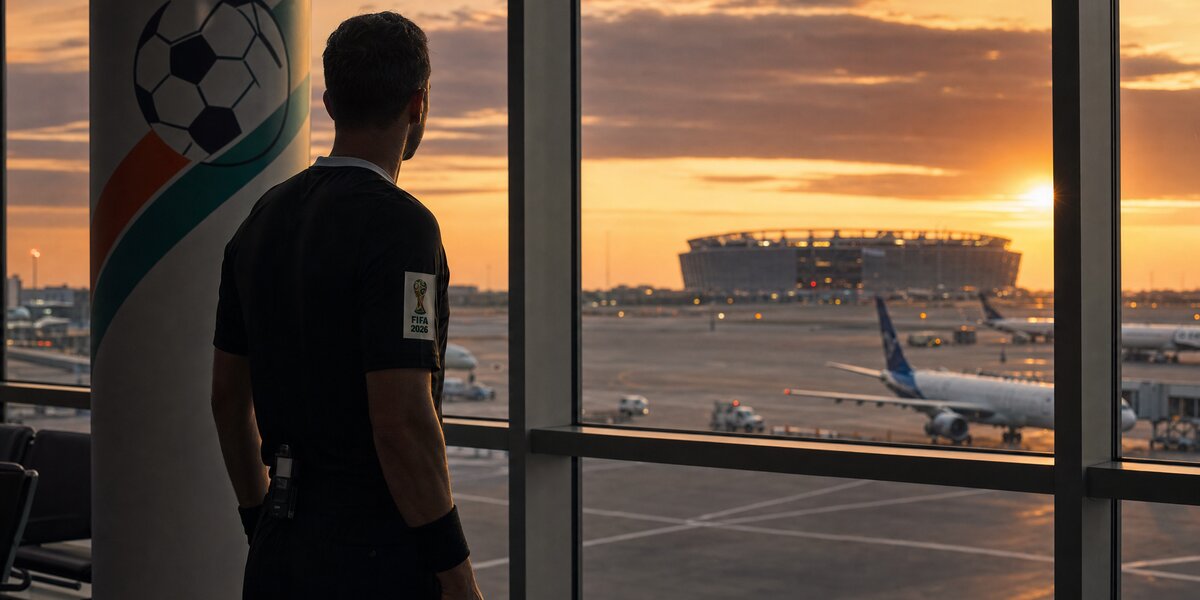
The wait is nearly over. In just 48 hours, the 2026 FIFA World Cup — the most ambitious, most expansive, and quite possibly the most unpredictable edition in the tournament's 96-year history — will roar to life at Mexico City's Estadio Azteca. When Mexico and South Africa walk onto that hallowed pitch on June 11, they won't just be kicking off a match. They'll be launching a revolution.
This is no ordinary World Cup. The field has swelled from 32 to 48 teams, a decision that has divided purists and pragmatists alike. Twelve groups of four. A newly introduced Round of 32. One hundred and four matches across three countries — Canada, Mexico, and the United States — spread over 16 host cities and five time zones. The math alone is staggering: that's 40 more matches than Qatar 2022, 11 more venues, and an entire extra knockout round. FIFA didn't just expand the tournament. They detonated it.
The Azteca Opens the Door to History
There's poetry in the opening fixture. The Estadio Azteca — the only stadium to have hosted World Cup matches in three different centuries — will once again become the center of the football universe. It was here that Pelé lifted his final World Cup in 1970. It was here that Diego Maradona scored the "Goal of the Century" in 1986. On Wednesday, a new chapter begins. Mexico, playing in front of a raucous home crowd, carries the weight of a nation that has hosted World Cups in 1970 and 1986 but never lifted the trophy. The pressure is immediate and unforgiving.
The Superstars: Who Defines This Tournament?
Every World Cup needs its defining icon, and 2026 offers a buffet of candidates. Lionel Messi, now 38, enters what is almost certainly his final World Cup, still draped in the albiceleste of Argentina. The defending champions landed in Group J alongside Austria, Algeria, and Jordan — a path that, on paper, should deliver them deep into the knockout rounds. The question isn't whether Messi can still produce moments of magic; it's whether his aging supporting cast can withstand the relentless physical demands of a 104-match tournament.
Kylian Mbappé arrives with unfinished business. France's Group I draw (Norway, Senegal, Iraq) looks manageable, but the ghosts of Qatar 2022 — where his hat-trick in the final wasn't enough — still linger. At 27, Mbappé is in his absolute prime. No player in the world combines speed, technical precision, and big-game instinct quite like he does. If France are to become the first repeat champions since Brazil in 1962, Mbappé must be the unstoppable force he was born to be.
Then there's Christian Pulisic, the face of American soccer, carrying the hopes of a host nation on his shoulders. The United States open their campaign on June 12 at SoFi Stadium against Paraguay — a fixture that might look straightforward on the calendar but carries enormous symbolic weight. With 78 of the 104 matches played on American soil, including every game from the quarterfinals onward, the USMNT has never had a better opportunity to make a deep run. Group D (Australia, Paraguay, Türkiye) is navigable, but the Round of 32 looms, and with it, the kind of pressure that either forges legends or breaks them.
The Dark Horses and the Chaos Factor
The expanded format invites chaos. Group-stage permutations become labyrinthine with 12 groups feeding into a 32-team knockout bracket. Third-place teams can advance. Goal difference becomes a weapon. The margin for error shrinks and expands simultaneously — lose your opener, and you still have two matches to recover; win your group, and you might face a rested giant that deliberately finished second elsewhere.
Watch for Norway, finally at a World Cup with Erling Haaland leading the line in Group I. Watch for Morocco, semi-finalists in 2022, drawn into Group C with Brazil — a rematch of the quarterfinal that shook the world. Watch for Egypt, with Mohamed Salah determined to leave a World Cup legacy that has so far eluded him. And never, ever count out Germany, even in a transitional phase, especially in a Group E that includes Ecuador, Ivory Coast, and Curaçao.
"The 48-team World Cup isn't just an expansion. It's a fundamental reimagining of what this tournament can be — more stories, more drama, more nations daring to dream."
The Stadiums Are Ready. Are the Teams?
From the shimmering modernity of SoFi Stadium in Los Angeles to the colossal AT&T Stadium in Dallas, from the historic Azteca to the iconic MetLife Stadium in New Jersey — which will host the July 19 final — the venues are architectural marvels built for moments of transcendence. The question now is which players will rise to meet the moment, and which will be swallowed by it.
The countdown is at 48 hours. The groups are drawn, the rosters are finalized, the flights have landed. On June 11, the world's greatest sporting event begins its boldest experiment yet. Forty-eight nations. One trophy. No more waiting.